


Focusing on filtration screens
filters, strainers, baskets, cones, cartridges
Filter cartridges are used to remove particles from liquids and gases before contaminants damage equipment, affect product quality or enter downstream processes. Although many cartridges look similar, their filtration performance can vary significantly because of differences in filter media, pore size, support structure, welding quality and overall dimensions.
For industrial buyers, selecting a suitable filter cartridges supplier requires more than comparing micron ratings and unit prices. The supplier must understand the operating medium, flow requirement, pressure conditions, installation interface and cleaning method before recommending a filter structure.
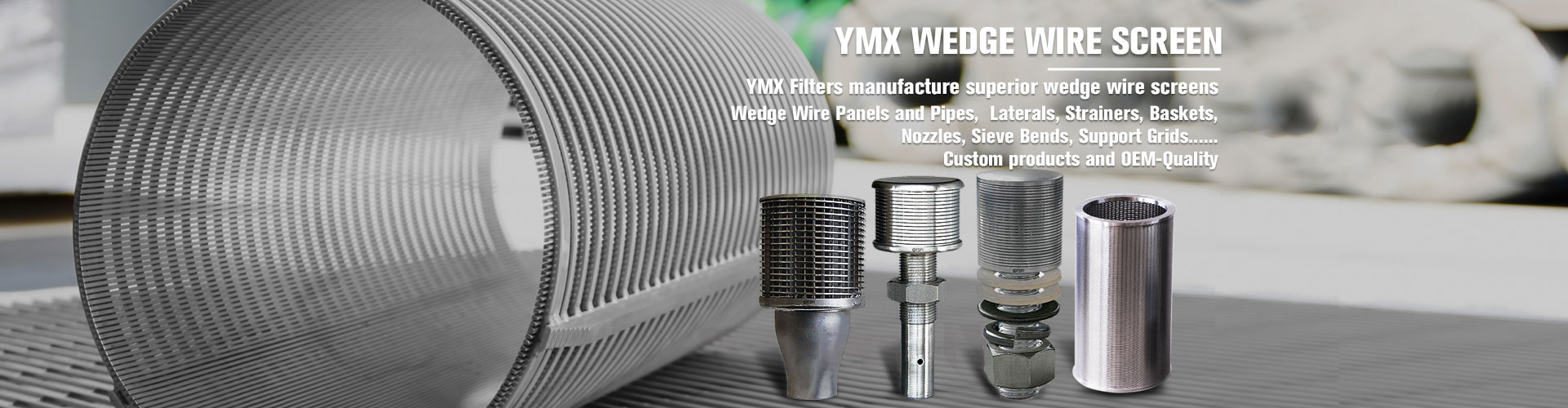
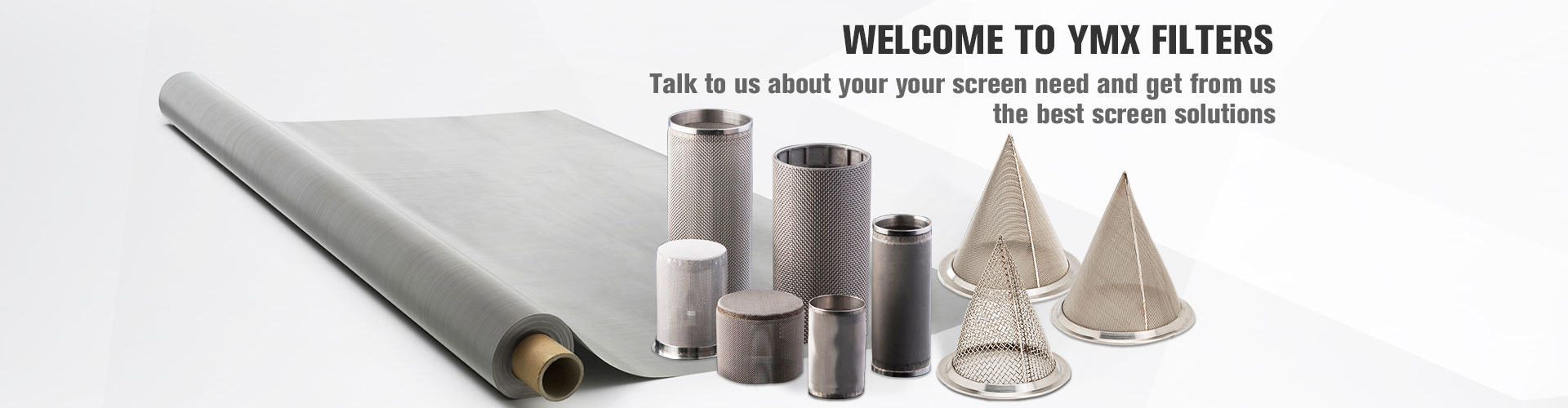
YMX manufactures stainless steel filter tubes and cartridges, including pleated wire mesh filters, sintered fiber felt elements, dip-tube mesh filters and application-specific cylindrical screens. Its product range includes custom sizes and filtration ratings from 3 to 200 microns for applicable pleated filter elements.
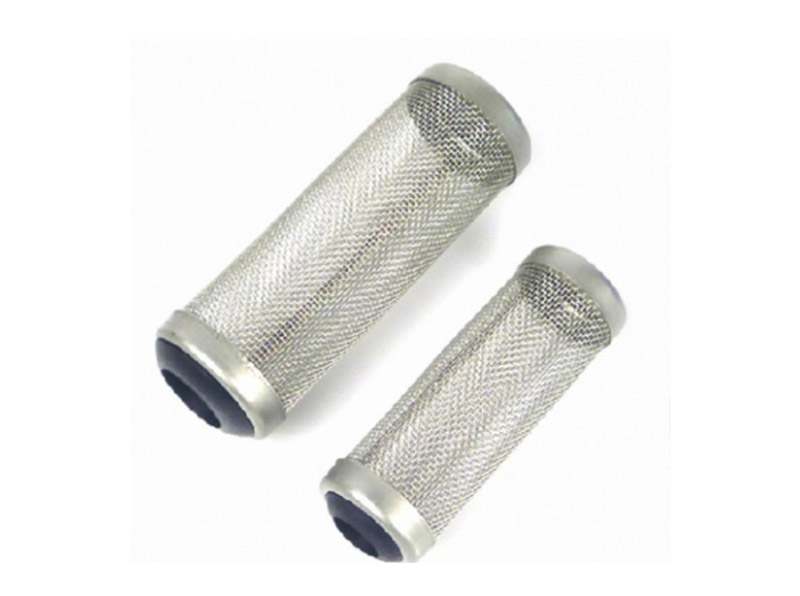
Different cartridge structures solve different filtration problems. Buyers should first determine whether they need a reusable precision filter, a coarse protective screen or a custom element designed to fit existing equipment.
A pleated filter folds the filtration medium into multiple pleats around a cylindrical support. This increases the effective filtration area without requiring a much larger housing.
Pleated wire mesh cartridges are commonly considered when the system requires:
Greater filtration area within limited installation space
Lower initial pressure drop
Higher dirt-holding capacity
Reusable metal construction
Resistance to elevated temperature
Mechanical strength during cleaning
YMX lists several pleated products in its cartridge category, including stainless steel sintered fiber felt elements, 304 stainless steel pleated filters and standard pleated wire mesh cartridges.
Stainless steel sintered fiber felt is produced by sintering fine metal fibers into a porous filtration medium. YMX describes this material as a depth-filtration medium with high porosity, a large filtration area and good dirt-holding capacity. The company also states that applicable elements can be reused after chemical cleaning.
This media type may be considered when:
Fine particle retention is required
The process generates relatively high contaminant loading
A pleated structure is needed
Repeated cleaning is planned
Stable metal media are preferred over disposable polymer cartridges
The buyer should still confirm whether the published micron rating is absolute or nominal and request the test method used to determine it.
Woven stainless steel wire mesh provides defined openings created by the wire diameter and weave structure. It is commonly used for surface filtration and applications where trapped particles can be removed from the outside of the mesh.
YMX identifies good mechanical strength, easy cleaning, temperature resistance and comparatively low cost among the characteristics of its stainless steel wire mesh filter elements.
Woven mesh can be suitable for:
Hydraulic and lubricating oil
Fuel systems
Water treatment
Chemical processing
Pump protection
Equipment inlet screens
Coarse and intermediate particle removal
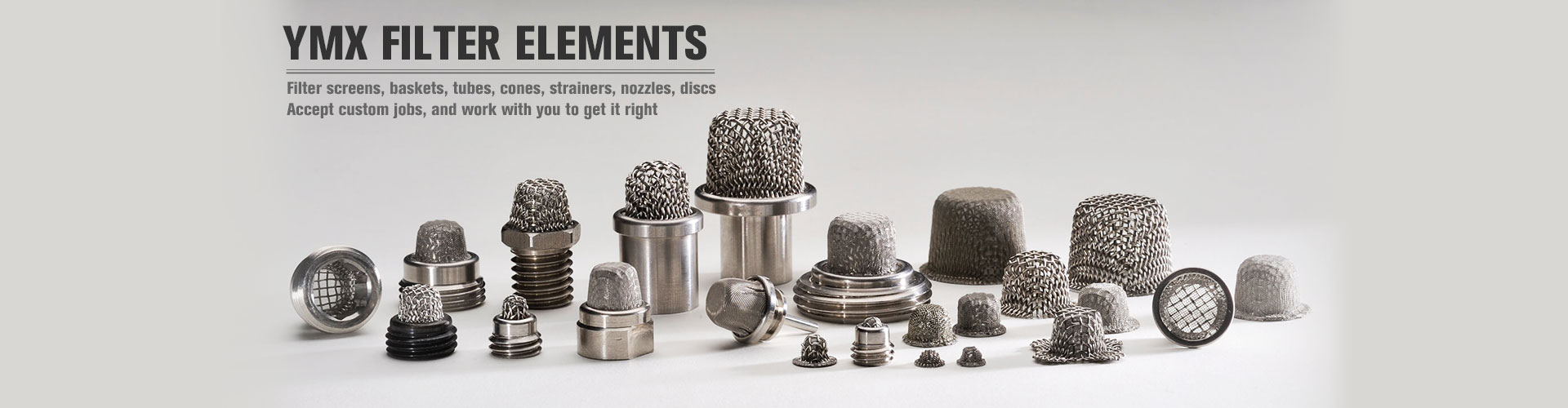
A dip-tube filter is installed at the end of or around a tube to stop particles from entering the fluid line. These elements may use a cylindrical mesh section with an end cap, threaded connection or press-fit structure.
The YMX category currently includes a 1/2-inch stainless steel dip-tube mesh filter for equipment requiring a compact tubular filter element.
For a replacement dip-tube cartridge, confirm the connection size, tube insertion depth, outside diameter and direction of flow.
Some cylindrical mesh products act primarily as guards rather than precision filter cartridges. For example, the category includes an aquarium inlet guard designed to protect the inflow opening.
A protective guard generally uses a coarser opening than a precision cartridge. Buyers should therefore distinguish between:
Preventing large objects from entering an inlet
Protecting pumps or valves from debris
Providing a defined fine-particle filtration rating
A useful quotation request should include the complete operating conditions rather than only the outside dimensions.
| Specification | Information to Provide |
|---|---|
| Filtered Medium | Water, oil, fuel, air, gas, resin, chemical or another process medium |
| Filter Media | Woven wire mesh, sintered fiber felt, multilayer sintered mesh or another structure |
| Filtration Rating | Required micron rating and whether it is nominal or absolute |
| Flow Rate | Minimum, normal and maximum flow |
| Pressure | Operating pressure and maximum differential pressure |
| Temperature | Normal, minimum and maximum operating temperature |
| Cartridge Dimensions | Outside diameter, inside diameter and overall length |
| Pleat Design | Pleat height, number of pleats and available filtration area |
| Internal Support | Perforated tube, expanded metal or other support structure |
| End Configuration | Open end, closed end, threaded, flanged, welded or custom |
| Seal Material | Gasket or O-ring material and dimensions |
| Cleaning Method | Backwashing, ultrasonic cleaning, chemical cleaning or replacement |
| Service Life | Target operating period or allowable terminal pressure drop |
| Quantity | Prototype quantity, batch order and estimated annual demand |
The smallest available micron rating is not automatically the best choice.
A finer filter can remove smaller particles, but it can also:
Increase pressure drop
Reduce flow capacity
Load with contaminants more quickly
Require a larger filtration area
Increase cleaning frequency
Raise manufacturing cost
YMX states that filtration ratings from 3 to 200 microns are available for its applicable pleated stainless steel elements. The correct value must still be selected according to the actual contaminant size and allowable pressure drop.
Before choosing a rating, define the purpose of filtration:
Protecting a pump may require removal of relatively large debris.
Protecting an injector or precision nozzle may require finer filtration.
Recovering valuable process particles may require a controlled aperture.
Final product clarification may require a different media structure from equipment protection.
Request a sample or performance test when changing from an existing cartridge to a finer grade.
A straight cylindrical filter tube has a relatively simple construction and can be suitable for coarse filtration, inlet protection and applications with limited contaminant loading.
A pleated cartridge places more filter media within the same approximate outside diameter. It is generally more appropriate when greater filtration area or dirt-holding capacity is required.
Choose a straight mesh tube when:
The filtration requirement is relatively coarse
The available installation length is sufficient
Cleaning access is straightforward
A simple, economical structure is preferred
Choose a pleated cartridge when:
Housing space is limited
Higher flow is required
Pressure drop must be controlled
The medium contains more particles
A longer operating period between cleaning cycles is required
The supplier should calculate or test performance using the complete cartridge, including its pleats, support tube, end caps and connections.
The filter medium cannot work independently of its supporting structure.
Fine wire mesh and fiber felt may deform under pressure if they are not supported properly. A perforated inner core or external protective cage can help prevent collapse, expansion and pleat damage.
The support design should be selected according to:
Direction of flow
Differential pressure
Cartridge diameter
Pleat height
Filter media thickness
Cleaning pressure
Vibration
Pulsating flow
The open area of the support tube must also be sufficient. A strong support with too little open area can become the main source of pressure loss.
The YMX category includes stainless steel cartridges, including a specifically identified 304 stainless steel pleated wire mesh filter.
When preparing an order, do not specify only “stainless steel.” Provide the exact material grade for:
Filter media
Perforated support
End caps
Center tube
Connection parts
Welding wire or filler material
Material selection should consider:
Chemical compatibility
Chloride exposure
Operating temperature
Cleaning chemicals
Required strength
Food or pharmaceutical requirements
Existing equipment material
The filter medium and support structure may use different grades, but all fluid-contact materials should be listed in the approved specification.
A technically suitable filter medium is useless if the cartridge does not fit or seal inside the customer’s housing.
Common cartridge configurations include:
Open at both ends
One open and one closed end
Threaded connection
Flanged end
Push-fit end cap
Bolt connection
Custom adapter
Integrated dip tube
For replacement orders, provide:
Existing cartridge drawing
Clear photographs
Housing dimensions
Connection thread
Sealing diameter
Gasket or O-ring size
Direction of flow
Physical sample where possible
Thread standards must be identified clearly. A stated “1/2-inch connection” is incomplete without confirming the applicable thread type and sealing method.
Metal filter cartridges are often selected because they can be cleaned and reused. YMX states that its stainless steel sintered fiber felt elements can be reused after chemical cleaning.
The actual cleaning method depends on the contaminant and filter media. Available methods may include:
Reverse flushing
Chemical soaking
Ultrasonic cleaning
Compressed-air cleaning
Steam cleaning
Controlled thermal cleaning
Before cleaning, confirm that the method will not damage the mesh, welds, seals or surface finish.
The supplier should also clarify how reusable cartridges should be evaluated after cleaning. A cartridge that looks clean may still have blocked internal pores or damaged pleats.
YMX describes itself as a custom metal filter and sieve equipment manufacturer and states that it accepts OEM orders and application-specific filter development. Its in-house capabilities include material cutting, mesh rolling, leveling, welding, stamping, perforating and plastic injection around filter screens.
A typical custom development process should include:
The buyer submits a drawing, sample or complete operating information. The supplier reviews filtration, pressure, material and installation requirements.
The wire mesh, sintered fiber felt or multilayer media are selected according to particle size, flow and pressure-drop targets.
Pleats, support tubes, end caps, seals and connection methods are developed around the available housing space.
Samples are manufactured for dimensional, installation and performance evaluation.
Testing may include flow, pressure drop, filtration performance, weld integrity and fit inside the customer’s housing.
The approved drawing, material list and sample become the reference for mass production.
Critical dimensions, filtration media and assembly quality are checked before shipment.


